Lebanon
Article
Beirut: Love on the Front Lines
April 2026: Lebanon is currently suffering from the war between Hezbollah and Israel which is affecting the community directly. AP War Updates: Lebanon LGBT "Crisis": Lebanon
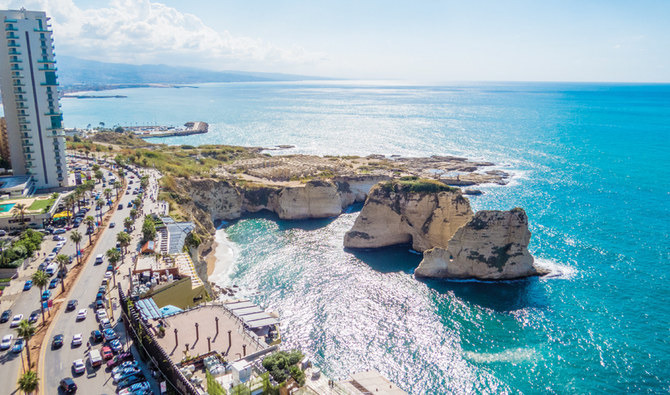
Source: Arab News / Beirut Coastline
When you first fly into Beirut, you might take the chance to look out over the chiselled Mediterranean coastline and dotted coved beaches if weather permits. And as you begin to walk the city, you start to breathe the mixed smell of sea salt and strong coffee and sense the echoes of history as its remaining colonial buildings silently chime to a different time within a modern city. Time will always change, but the soul of this city remains remarkably intact and you will be warmly welcomed by the amazing people of Beirut to make you feel confidently safe and cozy. Well, as long as you follow the rules...

There is an unwritten rule known as the ‘Karam’, a social contract if you like, which specifically offers hospitality to foreigners, protecting these visitors from the critical eyes that may be watching the locals.
In gay friendly areas like Mar Mikhaël, you might feel like you’ve walked into a Mediterranean paradise, famed as an artistic hub of the Middle East with its numerous live events and festivals, music, painting, literature, dance and theatre. They even had Gay Pride events between 2017 and 2019, though this was eventually shut down and its main organizer, Hadi Damien - "You cannot change stereotypes while you are still hiding", was arrested following 'religious' pressure and the final public events were disrupted and/or cancelled due to 'security concerns'. These 'concerns' clearly create a tension that continues to bubble away below the surface for the community.
Now, don’t get me wrong, you can absolutely have a great time in Beirut—check out the Nomadic Boys guide linked below for the best spots and more perspectives. But here’s a reality check: the fact that you need a VPN just to open Grindr tells you exactly how the authorities feel about our community.
There is definitely a sense of freedom here, but with the government’s attitude towards the gay community, that freedom is fragile and only the future holds its fate. As of April 2026, the future of public life depends heavily on the role Hezbollah will play, if any – and hopefully none. While they have historic control over the south and the Bekaa Valley, their influence on national security and social "morality" could go either way. This influence is not necessarily tangible in Beirut, but it’s there, hidden behind the smiles of a dangerous minority. Hezbollah does not hold the majority view on morality.
While you’re dancing in a relatively gay-friendly club like Autocar Beirut, the local guy next to you might be feeling a little anxious about the latest "Digital Crackdown." He’s been careful. He’s heard the stories. Maybe he knows a victim. But still the question lingers, is the date he’s waiting for what he seems, or a trap? In Beirut, the sense of safety only hugs the tourist. The reality grips the local. And to stay safe, even for tourists, it is important to keep your gay persona and activities under the radar.
May 2025: After posting lgbt material online while in Beirut, immigration tells gay bloggers never to return to Lebanon! Stefan Arestis: Nomadic Boys
While the local LGBT community knows to be careful, this awareness has in no way made it weak. It has built a vibrant, underground world where people can be themselves. You need to get to know someone to brought inside, but it’s worth it. This is where the real gay world of Beirut exists and it flourishes with private parties and dinners, drinks and meets of every kind. As we move through 2026, the community is organized and persistent. Sure, you have to be mindful about your public gay persona, and especially if you are trans. But there is a space, and we all need that.
The 2023 attack on Madame Om, a gay bar in Mar Mikhaël, by the Christian "Soldiers of God" (Jnoud el-Rab) shocked the local lgbt community and has made locals more cautious about their LGBT venues. The threat isn't just the police anymore, it's violent extremists who seem to mostly avoid arrest for their aggression. Islamist and Hezbollah Secretary-General Hassan Nasrallah has "[declared] war on "deviance" in sexuality by all possible means and without limits". But he would, wouldn't he...
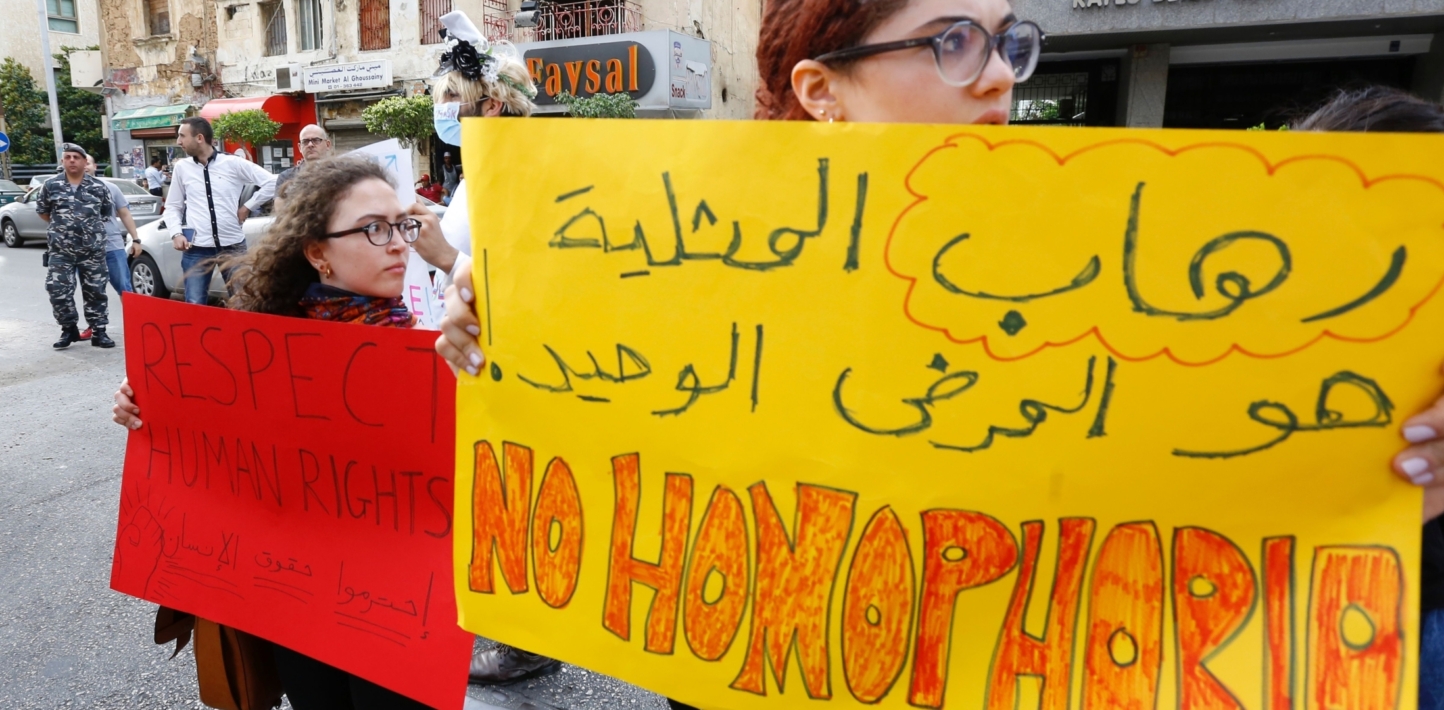
Today, there are still LGBT spaces 'above ground', but the owners are conscious of the new reality. Masking themselves as ‘mixed’ or 'alternative' and using private security to keep things quiet on the outside and avoid trouble. The night-spots have become a metaphor for how most of the LGBT community exist behind a more 'acceptable' label - a protective façade.
Facts vs. Fiction: The Reporting Gap
There is a huge gap between what the government says and what our community on the ground are saying. Lebanon is often called a "beacon of tolerance" in the Middle East, and in comparison to many countries in the middle east, it is. But then Article 534 is still on the books, criminalizing any sex that is "against nature." Threatening the whole community.
"A sharp increase in legislative attempts to criminalize sexual orientation and gender identity, widespread censorship, and coordinated attacks on LGBTQIA+ individuals and spaces." — Helem: LGBTQ Rights Violations Report
Even though some brave judges have challenged this law and other legal attempts at criminalizing the LGBT community - arguing that homosexuality is, in fact, part of the natural diversity of life - they have only been partially successful and have not succeeded in getting the authorities to actually take a walk and have a look at the reality of the natural world. Article 534 remains as an eleven-word act of terrorism.
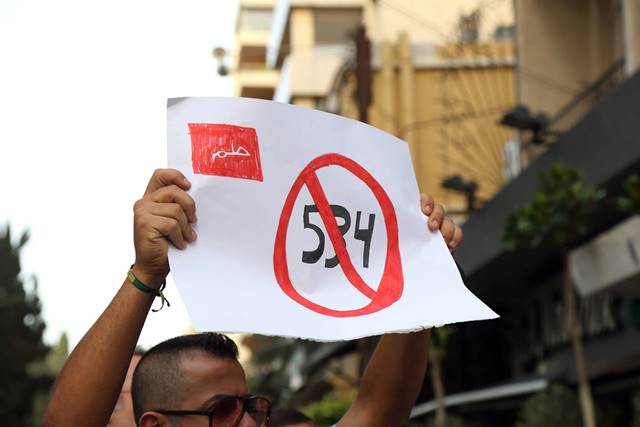
Article 534: "Any sexual intercourse against nature is punished with up to one year of imprisonment."
Lebanese Penal Code, 1943 Human Dignity Trust
Official hate crime logs in Beirut are essentially empty because nobody in their right mind is going to take the risk of reporting them. Organizations like Helem and Amnesty International say that survivors of violence won't go to the police. They're afraid the investigation will be turned against them and find themselves arrested for "morality" crimes.
To put that into perspective, if we assume that roughly 10% of Lebanon is either LGBT, or has some connection to that world - that’s over half a million people. If the majority of them are afraid to report LGBT hate crimes to the police, then hundreds of thousands are effectively erased from state protection.
| Category | Reported to Authorities | Reported to NGOs / Private | Gap Analysis |
|---|---|---|---|
| Gay/Bi Physical Assault | 0 - 2 cases | ~2,400+ annually | 99% Unreported |
| Trans-Specific Assaults | 0 cases | ~800+ annually | Total Invisibility |
| Digital Entrapment (Apps) | 5 cases (as arrests) | ~1,200+ cases | Victims treated as suspects |
| Workplace Discrimination | 0 cases | ~5,000+ reports | No legal recourse |
Source: Compiled from 2024-2026 reports (Helem, Oxfam, Human Rights Watch).
The glam and glitter of Beirut's nightlife is still fun, but it hides a massive number of unreported cases of harassment and violence. The state gets to pretend everything is super, while the community has to navigate a secretly oppressive city of ‘freedom’.
The local trans woman or the gay man meeting a date on a VPN knows that the law isn't there to protect them. It’s routinely there to trap them. In Lebanon, for most of the community, social silence is a survival strategy.
The "Sharaf" and the importance of blending in
In Lebanon, identity isn't always an individual choice, it’s family property. There are 15 different religious laws that govern life here and these codes prioritize "Sharaf" (The honor code). Anything that doesn't fit the traditional family mold is seen as a threat to the family’s reputation and standing within the community. This social standing should not be underestimated.
In general, the Lebanese LGBT community can live and thrive, as long as it is not seen.
The threat of being "outed" is weaponized. For locals, being kicked out by their family is often scarier than a year in prison.
It’s not necessarily that the family doesn't love you. It’s that the family can suffer because of you. While in Beirut where a ‘bubble’ of tolerance exists, coming out may cause a scandal, but outside the result of coming out or being outed are far more serious, where not just you but the whole family can be blacklisted from local trade or social gatherings. In this world, "coming out" isn’t realistic. Hiding your LGBT identity is essential for you and your family's survival and of course, for trans people and younger people without any guide on how to stay ‘hidden’, exposure is more prevalent and more dangerous.
Mental Health: The Price of living in the shadows
| Demographic | Key Metric | Primary Driver |
|---|---|---|
| Trans-Feminine | 46% Suicide Attempt Rate | Lack of legal recognition & social visibility consequences. |
| Youth (Ages 15–25) | 4x - 5x Higher Risk | Financial dependence & fear of family rejection. |
| Rural Youth | Higher Suicidal Thoughts | The "Sharaf" code and lack of "safe zones" outside Beirut. |
| Displaced (2026) | 30% Spike in Crisis Calls | Loss of "bubbles" and forced return to family units. |
Beirut? Yes, Beirut!
This has just been a taste of Beirut outside of the climate of war. Of course, you should not travel to any war zone, but once this situation has calmed down, and despite the shadows and legal hurdles, it would be a mistake to avoid Beirut because of its struggles. The community has created their own space, against all the odds, to live a life that is vibrant, defiant and far more liberated than what is possible in much of the region.
For the traveler and the local LGBT heroes that refuse to give up, Beirut offers a life that is a far better "deal" than most neighboring countries can even dream of. If and when we can, visiting Beirut to stand with the community would provide massive support and much-needed hope. After all, for all the cracks in the system, flowers take root and stand tall and Beirut remains the LGBT heartbeat of the Levant.
Practical Advice:
- Modesty & PDA:
Public displays of affection are generally discouraged for all couples. For LGBTQ+ travelers, PDA can be interpreted as a political provocation, potentially triggering "moral policing", harassment or even violence. Be aware: Blend into the culture.
- Gendered Spaces:
Many traditional areas remain strictly gendered. Respecting these boundaries is essential for maintaining your welcome.
- Photography:
Avoid photographing security installations or protesters, as this can lead to device confiscation and a "Digital Audit."
- Social Media:
Don't upload any LGBT material online while in Lebanon, and never photograph LGBT individuals without their express permission and understanding of the risks.